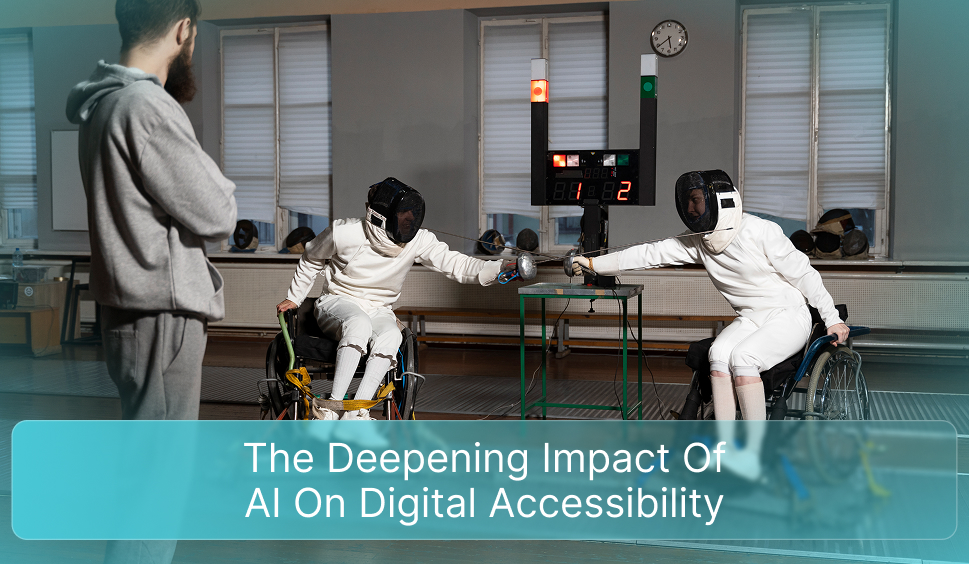
The Deepening Impact of AI on Digital Accessibility
Artificial intelligence (AI) is transforming digital accessibility, enabling more inclusive environments efficiently and cost-effectively. AI tools can auto-generate captions, suggest alt text, and flag low-contrast content to help meet WCAG standards, though human oversight is still essential to correct errors and address bias. Globally, an estimated 1.3 billion people experience significant disabilities, making AI vital for tasks like transcribing meetings, composing emails, describing images, and converting voice to text. In the U.S., these tools also support compliance with the ADA, which mandates accessibility in workplaces and public spaces. Despite their benefits, AI tools are not perfect; some, such as Slack’s message suggestions or PDF summarizers, produce errors. A 2023 University of Washington study noted AI’s accessibility potential but highlighted concerns over bias, verifiability, and overpromises.
AI in the Workplace
AI is reshaping multiple aspects of the employee experience, from recruitment and onboarding to day-to-day tasks. For example, AI tools such as Workable and hireEZ help organizations source candidates more efficiently by analyzing profiles and matching them with job descriptions. Similarly, startups like Pymetrics, which uses AI-driven games to assess skills and reduce unconscious bias, aim to create fairer hiring processes. However, these tools still require human supervision to ensure qualified candidates, including those with disabilities, are not unfairly screened out. ADA guidance from May 2022 emphasizes that employers must review AI-driven hiring decisions to prevent potential discrimination.
Beyond recruitment, AI helps individual employees with disabilities perform their roles more effectively. For example, Microsoft’s Seeing AI and Be My Eyes apps provide audio descriptions for people with low vision, assisting them in reading text, identifying objects, and recognizing faces. Employees who are hard of hearing can use tools like Google’s Live Transcribe and Descript to convert speech to text, while NaturalReader transforms written content into audio.
These technologies reflect principles of universal design, which aim to create environments usable by everyone regardless of age, size, ability, or disability. As defined by the Centre for Excellence in Universal Design, universal design is not a special accommodation but a fundamental element of good design that benefits all users.
AI-Driven Accessibility on the Web
AI is particularly impactful in improving online accessibility. Following WCAG standards ensures websites are navigable and readable for all users, including those with visual or hearing impairments. For instance, sufficient color contrast, alt text for images, and video captions are essential accessibility requirements. AI tools streamline this process by automatically generating captions, suggesting alternative text, and identifying contrast issues.
While AI facilitates compliance, human oversight remains indispensable. Errors in AI-generated content can mislead users, especially those relying on accessibility features. A 2023 Pennsylvania State University study found that some AI text classifiers exhibit bias against people with disabilities, labeling content as negative or toxic based solely on disability-related terms. Experts recommend involving individuals with disabilities throughout AI development to mitigate bias and enhance accuracy.
The United Access Board, in its 2024 preliminary findings, emphasized the need for diverse training datasets that include people with disabilities. They also highlighted risks associated with AI-powered surveillance tools, or “bossware,” which may not accurately monitor employees with disabilities, creating potential inequities in workplace oversight.
A Balanced Approach to AI Accessibility
Since the late 2010s, businesses have made strides toward online accessibility, partly due to the ADA’s application to digital platforms. However, relying solely on AI will not achieve fully inclusive digital experiences. AI remains a valuable tool, but its limitations must be acknowledged and supplemented with human evaluation and continuous improvement. When used correctly, AI can make digital content more affordable, efficient, and accessible, enabling businesses to create inclusive online environments for all users.
How WAC Supports AI-Driven Digital Accessibility?
WAC is a powerful web accessibility checker designed to help businesses ensure their websites comply with WCAG and ADA standards. By scanning web pages for issues like color contrast, navigation barriers, and missing alt text, WAC identifies accessibility gaps that may affect users with disabilities. Its real-time monitoring and detailed reports provide step-by-step guidance for improvements, helping companies maintain inclusive and user-friendly websites. By using WAC alongside AI accessibility tools, businesses can effectively combine automation with informed oversight to create accurate, equitable, and accessible online experiences for all users.
Need an accessibility audit? Contact us today
Let's Connect

 Let's Discuss Your Tech Solutions